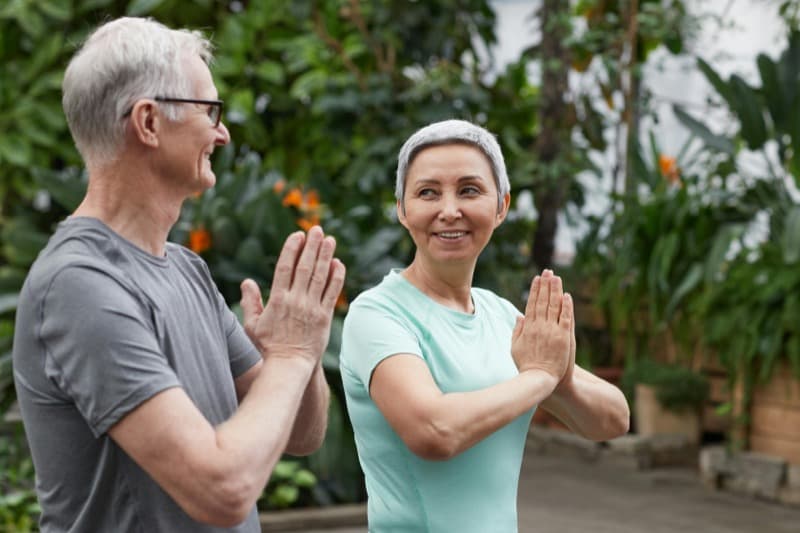
Many people first discover Tai Chi after searching for phrases like Chinese lymphatic exercises, Asian fascia release, or gentle exercises for mobility.
What they often find is something much older and far more complete than a simple exercise routine.
Tai Chi is a traditional Chinese movement practice that combines slow, flowing movements with relaxed breathing and mindful awareness.
For centuries, it has been used to support balance, mobility, coordination, and overall wellbeing.
Today, modern research is also exploring how these gentle movements may support healthy ageing, fascia mobility, and the body's natural systems.
What Is Tai Chi?
Tai Chi (also written Tai Chi Chuan) originated in China as a martial art, but over time it became widely recognised for its health benefits.
Unlike high-intensity exercise, Tai Chi focuses on smooth, continuous movement performed at a relaxed pace.
Each movement flows naturally into the next, creating a practice that is gentle on the joints while engaging the entire body.
A typical Tai Chi practice combines:
Slow flowing movements
Gentle weight shifting
Coordinated breathing
Upright posture
Relaxed attention
This makes it suitable for people of many different ages and fitness levels.
Why Beginners Often Enjoy Tai Chi
One of the biggest misconceptions is that Tai Chi is difficult to learn.
In reality, beginners can benefit from practising just a few simple movements.
You do not need flexibility, strength, or previous experience.
The focus is simply on moving comfortably and becoming more aware of how your body moves.
Over time, these small movements build confidence, coordination, and greater ease of movement.
How Tai Chi Supports Mobility
Tai Chi encourages the body to move through multiple directions in a slow and controlled way.
The practice includes:
Gentle twisting through the spine
Weight shifting between the legs
Controlled stepping
Shoulder and arm movements
Soft knee bending
Upright posture
Together, these movements help improve mobility while reducing unnecessary tension throughout the body.
Tai Chi and Fascia Health
Fascia is the connective tissue that surrounds muscles, joints, nerves, and organs throughout the body.
Healthy fascia allows different tissues to move smoothly together.
Tai Chi naturally encourages this through continuous, flowing movement.
Rather than isolating individual muscles, the practice connects the whole body, allowing movement to travel smoothly from the feet through the legs, torso, arms, and hands.
As we explored in our guide on Fascia Exercises, gentle movement is one of the most effective ways to support long-term mobility and reduce feelings of stiffness.
Can Tai Chi Support Lymphatic Flow?
The lymphatic system relies on movement, breathing, and muscle activity to help move lymph fluid throughout the body.
Unlike the heart, there is no pump driving this system.
This is one reason gentle movement plays such an important role.
Tai Chi includes many of the movements that naturally support lymphatic flow, including:
Deep breathing
Weight shifting
Gentle muscle activation
Full-body movement
Joint mobility
As we discussed in our article on The Ancient Chinese Lymphatic Detox and Fascia Release Method, these movements do not "detox" the body in a dramatic way.
Instead, they support the body's own natural processes through regular movement and healthy circulation.
More Than Physical Exercise
Tai Chi is often described as moving meditation.
Because movements are slow and coordinated with the breath, many people notice they naturally become calmer while practising.
This combination of movement and mindful attention can help:
Reduce stress
Improve body awareness
Encourage relaxation
Support balance
Increase confidence in movement
It is one reason Tai Chi remains popular around the world today.
A Practice for Healthy Ageing
Tai Chi is one of the few forms of exercise that people can continue practising well into later life.
Research has consistently shown that it can support:
Balance
Mobility
Coordination
Functional movement
Confidence while walking
These benefits make it an excellent choice for anyone looking to stay active in a gentle and sustainable way.
Getting Started Is Simpler Than You Think
You do not need special equipment or athletic ability to begin.
Start with:
Five to ten minutes of practice
Slow, comfortable movements
Relaxed breathing
Comfortable clothing
A quiet space where you can move safely
Like any skill, the benefits grow through regular practice rather than intensity.
Bringing It All Together
Tai Chi offers far more than gentle exercise.
Its slow, flowing movements support mobility, balance, fascia health, and the body's natural movement systems while helping create a sense of calm and body awareness.
Whether you discovered Tai Chi through searching for Chinese lymphatic exercises, fascia health, or healthy ageing, you are exploring a practice that has supported people's wellbeing for centuries.
The beauty of Tai Chi is its simplicity.
Move gently.
Breathe naturally.
Practise consistently.
Over time, those small daily movements can make a remarkable difference.