Most people try to manage stress by pushing through it.
More caffeine. More distraction. More stimulation.
But stress and anxiety are not just mental experiences. They are deeply connected to the nervous system and the body itself.
That is why true stress recovery is not only about thinking differently.
It is about helping the body shift out of survival mode.
This is where natural biohacking becomes powerful.
As we explored in our guide on natural biohacking, many of the most effective ways to improve energy, focus, and emotional balance come from supporting the body’s own regulatory systems naturally.
Your Nervous System Is the Control Panel
The nervous system constantly responds to:
Stress
Sleep quality
Breathing patterns
Movement
Emotional experiences
Stimulation and environment
When stress becomes chronic, the body may remain stuck in a more activated state.
This can contribute to:
Anxiety
Mental fatigue
Restlessness
Poor sleep
Muscle tension
Difficulty relaxing
Natural biohacking focuses on helping the nervous system regain balance.
The Stress Response and Recovery Response
The body has two major states:
Sympathetic activation, often called fight or flight
Parasympathetic activation, often called rest and digest
Modern life often keeps people in a more stimulated state for long periods of time.
One of the most important parts of biohacking stress is learning how to activate recovery states more consistently.
Breathwork as a Nervous System Tool
Breathing patterns strongly influence stress levels.
Fast, shallow breathing tends to reinforce tension and nervous system activation.
Slower, more controlled breathing helps signal safety to the body.
This can help:
Reduce stress accumulation
Improve emotional regulation
Increase calmness and focus
Support better recovery
Simple techniques like:
Extended exhales
Slow diaphragmatic breathing
Coherent breathing
Nasal breathing
can help regulate the nervous system naturally.
Our Breathwork for Self-Healers course is built around nervous system regulation and stress recovery, using guided practices designed for long term resilience.
We also explore this further in our guide to vagus nerve exercises for anxiety and how breathwork affects the nervous system directly.
Movement Helps Release Stress Physically
Stress is not only stored mentally.
It often shows up physically through:
Tight shoulders
Jaw tension
Restlessness
Shallow breathing
Fatigue
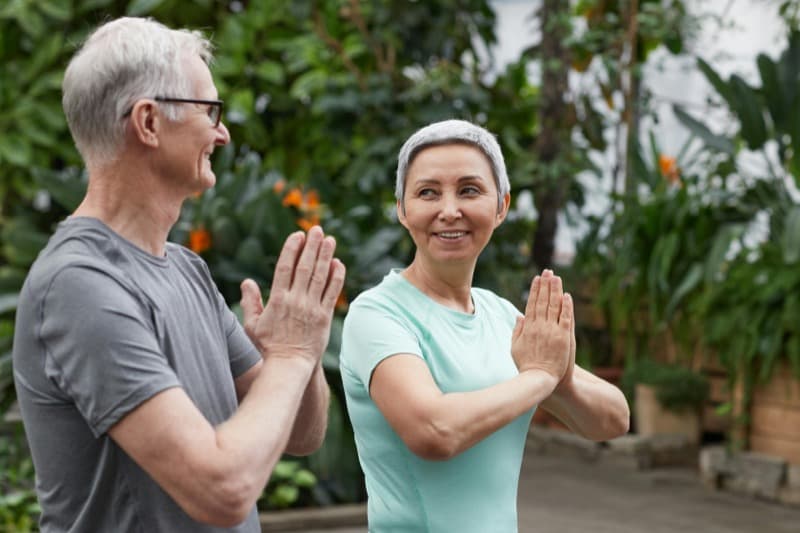
Gentle movement practices like qigong, tai chi, mobility work, and walking help the body release accumulated tension while supporting circulation and nervous system balance.
Unlike high intensity training, these practices help calm the body while still creating movement and energy flow.
Meditation and Emotional Regulation
Mindfulness and meditation help create awareness around stress patterns instead of constantly reacting to them automatically.
This helps build:
Emotional resilience
Nervous system awareness
Attention regulation
Greater calmness during stress
The Emotional Regulation section of our Essence of Meditation course covers dissolving and letting-go practices designed to support exactly this process.
Heart Rate Variability and Stress Recovery
Heart rate variability, often called HRV, is becoming an important topic within biohacking and longevity science.
Higher HRV is generally associated with:
Better stress resilience
Improved recovery
Greater nervous system flexibility
Practices like:
Breathwork
Meditation
Sleep improvement
Gentle movement
all help support the same recovery systems connected to HRV and nervous system regulation.
Keep Nervous System Regulation Simple
One of the biggest mistakes people make is overcomplicating stress recovery.
The nervous system responds best to simple, repeatable habits.
This may include:
Morning sunlight
A few minutes of breathing
Gentle movement during the day
Reducing overstimulation
Evening mindfulness practices
Better sleep consistency
These small habits help train the body toward balance over time.
Bringing It All Together
Stress and anxiety are not signs that something is wrong with you.
Often, they are signs that the nervous system needs support and recovery.
Natural biohacking gives us practical ways to help regulate the body through breathing, movement, mindfulness, and recovery practices.
Our Senior Holistic Health Program covers stress across breath, body, and mind pillars, helping you build sustainable habits for long term well being.